
Stop competing for attention: compete for trust
Mid-sized companies don't win attention. They win trust.
I've seen many companies — especially those selling a tech product — make the same (costly) mistakes when it comes to creating content.
For example, imagine you're a tech company offering insurance, a financial product or some kind of legal advice.
The pattern I keep seeing in these companies and products, in their marketing, is always the same:
- “Hey, you! Check out our product — it's amazing, it has 10 million features.”
- “Look how pretty our app is. Look how good these colors are.”
- “This is (insert famous artist/athlete)'s favorite app.”
And sure, this can work very well for big companies. But for mid-sized and smaller competitors trying to carve out a space, playing the same “engagement” game — the game of grabbing attention — will end up costing you money you can't afford to spend right now.
What's the alternative? While other companies play the attention game, you play the education game. Instead of dazzling with features, colors or celebrities, focus your communication and your marketing on teaching, solving problems and building trust.
To do that, here are 3 types of content you can start working on today, with examples of what they look like:
01 Sandbox or playground
In its simplest form, it means giving your potential customer a real test drive of your app — no forced sign-up, no “free” version, and with the reassurance that nothing is at stake yet.
For example, do you offer loans? Don't just show people what they'll be able to do in your app: let them use it, try it, learn from it. Imagine a simulator where anyone can build their own loan in 2 minutes without handing over a single piece of personal data.
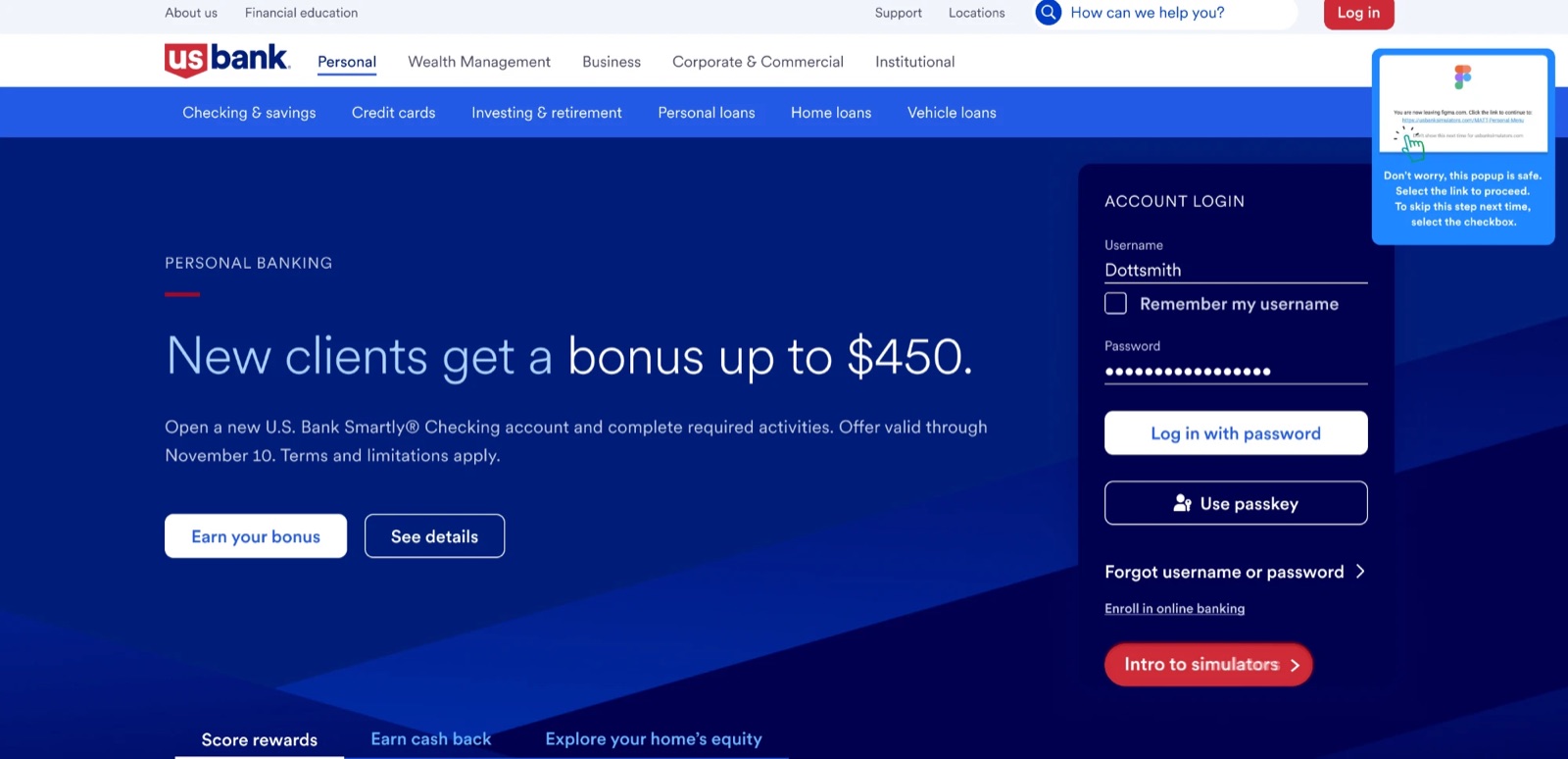
A great example of this is U.S. Bank's digital banking simulator. Anyone can explore its app and online banking for free with sample data, without logging into their own account, while the simulator shows them where to go next.
02 Interactive testimonial
This is a type of content I find incredibly valuable and hugely underused. It's about putting a twist on your customers' stories: instead of reading them, people get to live them! You can walk your user through the problem, the challenges, the solution and the impact experienced by another customer who likely shares their problem. Imagine that at every point in the story they have to decide what they would do — and then discover what the real customer did.
Stories move us, and being able to live them adds a whole new dimension to your prospective customers' experience.
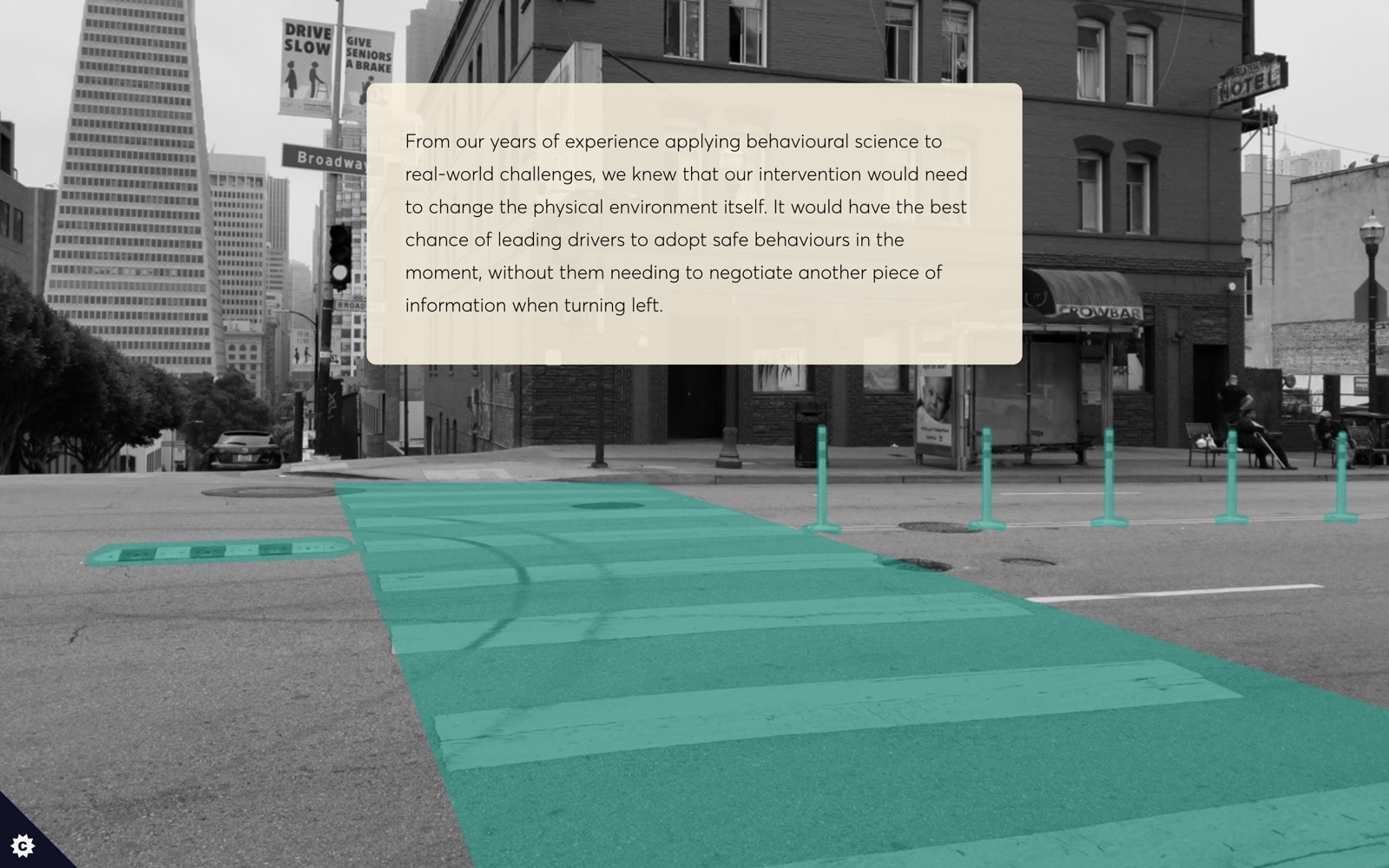
A great example is BIT's case on making San Francisco's streets safer for pedestrians. Instead of reading a report, you move through the story by scrolling: the photo of a dangerous intersection stays fixed and, as you go, each change they made appears on top of it, all the way to the result.
03 Gamification
This is simply creating a game. Of course, it's not play for play's sake: it needs a logic that demonstrates our value as a brand. For example, imagine we sell plants online; we could create a small plant-care game. “1 week. 10 plants. How many survive?” Yes, it sounds dramatic, but whoever plays it learns about plant care, has fun, and at the end we could even give them a reward that leads them to buy one of our products. Games are an excellent way to build the kind of empathy and presence no traditional ad can give you.
A great example is this demo we built for a plant retailer. We took their care guide and turned it into a 3-minute game: you pick a plant, find it a spot in a house and look after it for a week. What used to be read is now experienced. Watch it here:
These examples all follow one very clear idea: get people to trust you, give before you ask, teach before you demand. Don't be the company shouting “look at me, look at me!”. Be the brand that guides.